

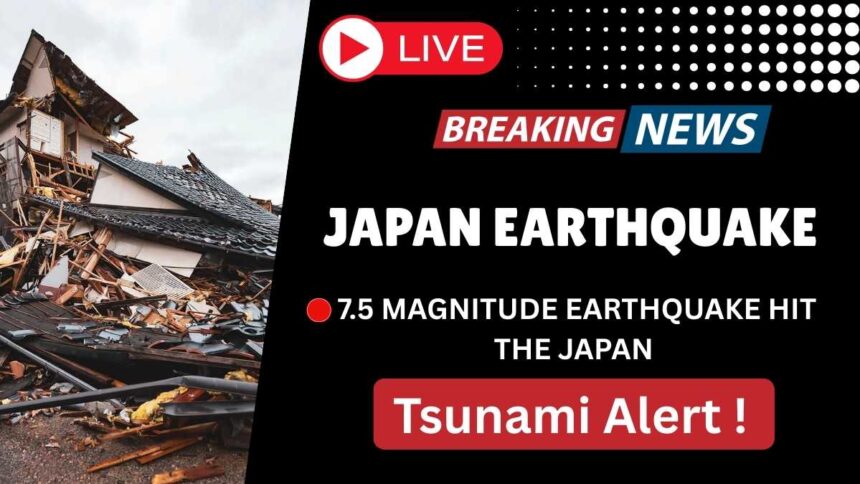
On 8 December 2025, at approximately 23:15 JST, a catastrophic earthquake struck Northeast Japan. There was an immediate tsunami warning, large-scale evacuations of people and property, and numerous concerns among people living in the affected region due to earthquake-related damage.

The Japan Earthquake 2025 registered at a magnitude of 7.5 (previously 7.6) and was located about 80 kilometres off the coast of Aomori Prefecture, below the Pacific Ocean at a depth of nearly 50-54 kilometres. Get more information below about the Japan Earthquake 2025, the Tsunami warning, and updates on the earthquake.
Japan Earthquake 2025
The Japan Earthquake 2025 severely affected many of the coastal towns near the quake’s epicentre. The City of Hachinohe (Aomori) recorded a seismic intensity of “upper 6” (7=very strong), the shindo scale (1-7) used by Japan to determine the potential for an earthquake from start to finish makes it a near certainty that an earthquake will be felt, making it impossible to remain standing or walking, and can cause furniture to fall, walls to crack and windows to shatter in structurally vulnerable buildings.

In Japan’s earthquake, more than 20 people were injured. But according to the fire and disaster management, 23 people were injured in the tsunami and earthquake. In some regions, like Kuji port in Iwate prefecture, south of Aomori, experienced 70cm of Tsunami. After Monday’s earthquake, Japan’s Meteorological Agency issued the highest level of advisory for people living in Japan.
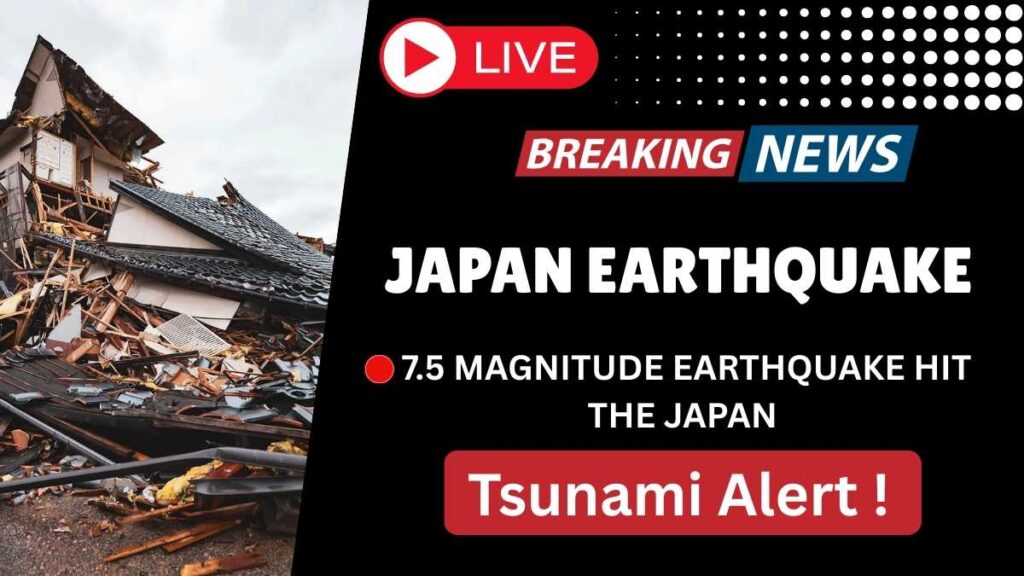
Damage, Casualties and Injuries
In the first reports, officials stated that approximately 23 people sustained injuries, primarily due to falling debris and building tremors, as well as slips and trips caused by the earth’s earthquake. Many locations experienced power outages, with one location reporting a small fire. However, reports have not indicated that any major structural collapses or fatalities occurred.

Rail service and transportation, including express /bullet train lines, were temporarily halted throughout affected areas. As of now, Nuclear Power Plants in the area are undergoing rigorous inspections; no radioactive material or nuclear safety violations have been discovered.
Tsunami Warning and Coastal Impact
Shortly after the earthquake, the Japan Meteorological Agency (JMA) released a tsunami warning for the northern Pacific-coast prefectures (Hokkaido, Aomori and Iwate Prefectures,) indicating that waves could be possible as 3 metres (≈ 10 ft) or higher.

As of early Tuesday, the JMA lowered its alert level from a ‘Warning’ to a ‘Watch’ state, followed by an ‘Advisory’ state, then, finally, a full cancellation of all possible tsunamis due to lower risk assessments.
Impact Of EarthQuake On North Japan
This quake was in the same general area that experienced the very large 2011 earthquake and tsunami; therefore, there are concerns regarding long-term earthquake activity along the northeastern coast of the Pacific Ocean. As the quake registered at an upper 6 intensity, it indicates that this is a larger earthquake than we typically have experienced here; therefore, many buildings (especially older ones) are potentially at high risk.

This event is a strong reminder to all residents in the area of their level of preparedness and the standards that buildings need to comply with in order to prepare their buildings for the event of an earthquake. Since it occurred offshore, the depth and magnitude of this quake indicate an ongoing potential for aftershocks and other earthquake activity, so officials will continue to monitor for the possibility of aftershocks.
Precautions To Be Taken By Residents
Although the tsunami watch has now been lifted, the Japan Meteorological Agency (JMA) continues to urge residents of Japan to remain vigilant of possible aftershocks. Residents residing in previously evacuated areas are now able to return home. However, exercise caution when returning to coastal areas, unstable hills/erosion-prone cliffs, and/or older buildings.
Emergency Management and Government agencies throughout Japan are working together to assess areas of damage, restore electrical power/infrastructure, as well as assist those who have suffered injury and/or displacement as a direct result of this earthquake.
For residents in earthquake-prone jurisdictions: Keep your emergency preparedness kit stocked and ready for a disaster; create an evacuation plan and ensure that you are aware of your local Government and Disaster Planning Agency guidelines.
Japan Earthquake 2025-Conclusion
A recent earthquake on December 8, 2025, reaffirms Japan’s position as one of the most seismically active nations in the world. The magnitude of the earthquake was considerably lower than had been anticipated because of fears related to tsunami risk; however, the earthquake has reminded us of the great importance of being prepared for, responding to, and raising public awareness about earthquakes.
Frequently Asked Questions
- Why did the tsunami warning come about?
- The earthquake happened on the ocean floor, at a depth of 7.5-+, which can create a displacement of water that results in tsunamis; therefore, the Japan Meteorological Agency (JMA) has issued a tsunami warning for coastal regions.
- How tall were the tsunami waves?
- For most areas, the reported height of the tsunami waves was between 20-70 cm. The much-feared height of 3 m never occurred.
- Has there been any major destruction or deaths caused by the tsunami?
- As of now, there have been no deaths and no major structural damage due to the tsunami. There are some minor injuries, some power and transportation outages, and one fire.
- Is the threat of a tsunami over?
- Not completely. Although the tsunami warning has been cancelled, the JMA is still maintaining an earthquake warning, indicating that there is still a reasonable chance of larger aftershocks or new earthquakes in the next several days.