
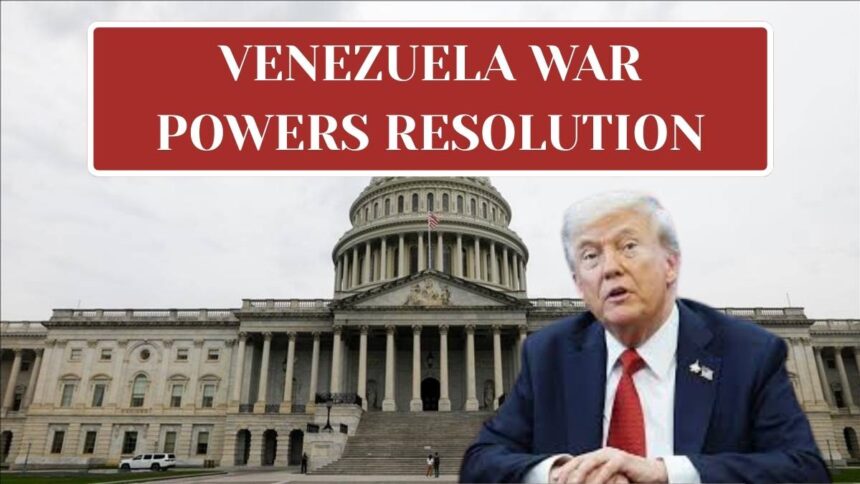
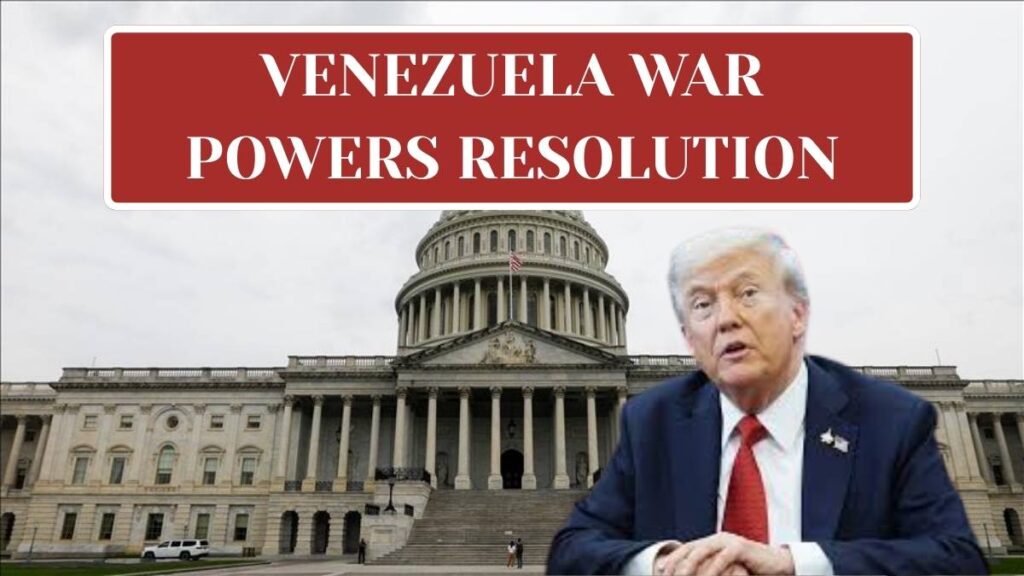
This week, Congress took the first steps to reestablish its responsibilities under the U.S. Constitution regarding the ability to use the U.S. Military by passing a number of resolutions that called on the president to stop using force against Venezuela. While these resolutions passed the House of Representatives on December 17, 2025, they were not enacted into law as a result of political pressure preventing Republicans from supporting them.
The Resolutions that passed the House were called “Resolution for Bipartisan Military Action in Support of Venezuela” and “Resolution for Bipartisan Action Against Venezuela’s Drug Trafficking and Terrorism”. Both were rejected by a very close vote that was heavily partisan. The proponents argued that these resolutions were the only way to limit the president’s ability to act without Congressional approval. Republicans opposed these resolutions because they believed they would hinder efforts to combat drug trafficking and terrorism.
What happened before?
In early November, the Senate was the first chamber to take steps to allow Congress to vote on a war powers resolution regarding the military use against the country of Venezuela without congressional permission. The Republican majority in the Senate stopped a privileged motion by Senate Democrats that allowed for this vote.

This motion was blocked by the majority and, therefore, the proponents of congressional oversight were left with no other options than to find a different way to bring this issue before Congress. Congress had repeatedly called for votes after nearly four months of increased military engagement in Brazil and Colombia by the United States.
New Updates
Both legal and practical issues were raised by those advocating for congressional oversight of military operations conducted by U.S. forces since January 20, 2015. Concerns included uncertainty regarding the legality of certain strikes, evidence of civilian casualties occurring due to U.S. activity at sea, and potential for escalating military involvement in the Middle East.

Furthermore, international responses (e.g., United Nations) and the resultant economic ramifications (e.g., spikes in oil prices) were highlighted. Administration supporters argued that military operations are targeted, lawful, and designed to address transnational crime impacting American communities.
While the House of Representatives has failed to pass any resolution regarding military operations in the region, supporters will continue to seek alternative paths toward holding legislative oversight over military operations through privileged motions of the House, amendments to defence appropriation legislation, and public hearings.

Senators and Representatives who have indicated their intent to pursue this issue again believe that the War Powers Act of 1972 provides a mechanism for Congress to compel the President to remove U.S. forces if he has not obtained Congressional approval. As such, the President currently possesses full authority to conduct operations as part of this ongoing campaign, and escalating tensions associated with Venezuela continue to be a significant point of contention for Washington.
FAQ’s Related To Venezuela War Powers Resolution
What was the War Powers Resolution Congress debated?
The resolutions being debated relied on the War Powers Resolution of 1973 to compel the president to halt US forces from engaging in or toward Venezuela until Congress provides authorisation to proceed.

What is the reason for Congress acting now?
Legislators were motivated by recent substantial US activity near Venezuelan territorial waters, a high-profile seizure of tankers on December 10, and Trump’s announcement, on December 16, of the establishment of ‘blockades’ for vessels carrying sanctioned Venezuelan oil.
What has happened in the House/Senate to this point?
On December 17, the House has yet to vote to approve two resolutions designed to limit the president’s exercise of powers concerning Venezuela.
What legal authority does the War Powers Resolution provide Congress?
This law gives Congress legal authority to direct the removal of forces from hostilities not approved by Congress.