
CDC (Centres for Disease Control and Prevention) regularly issues an updated schedule of vaccinations for children to protect them from various life-threatening diseases. The CDC has released a major update to the childhood vaccination schedule. The revised version is significantly smaller than previous versions, indicating a change in how families and physicians will now administer immunisations to their children.

The CDC has historically provided an immunisation schedule, beginning from birth and extending to 18 years of age, with the corresponding recommended vaccines based on the child’s age. The CDC developed these schedules in collaboration with the Advisory Committee on Immunisation Practices (ACIP) and included vaccines for routine protection against illnesses like measles, polio, chicken pox, and whooping cough.
CDC Vaccine Schedule 2026
On January 5, 2026, the Centres for Disease Control and Prevention (CDC) announced new guidelines, consistent with recommendations by the World Health Organisation (WHO), to better align the U.S. vaccination schedule with other countries.

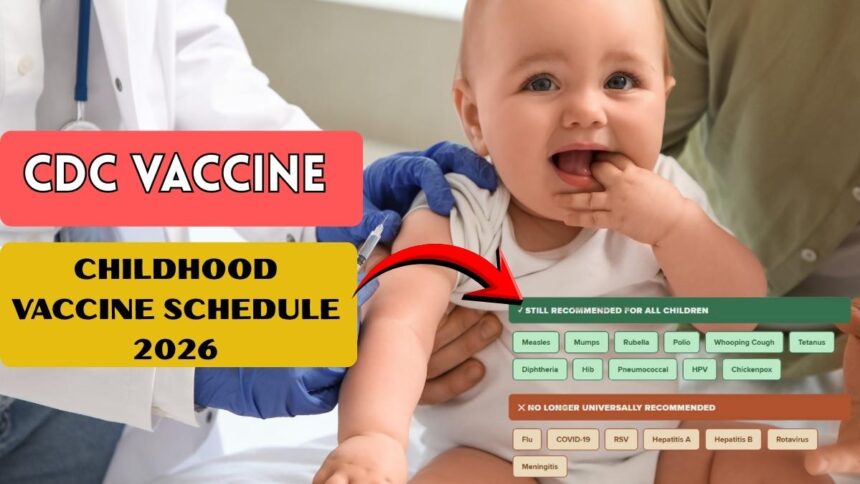
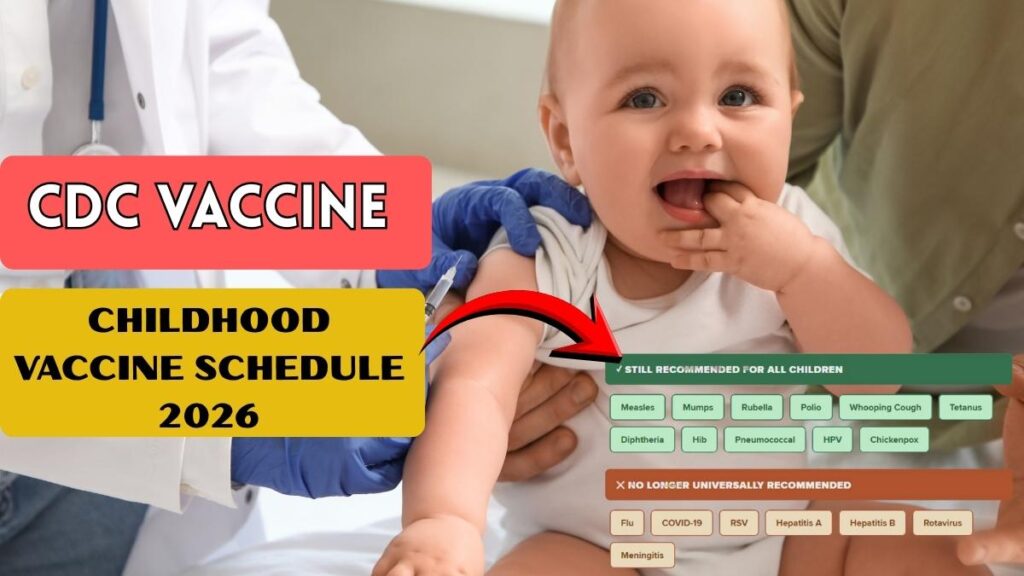
- Certain vaccines that were previously recommended for all children (e.g., flu, rotavirus, meningitis, hepatitis A, COVID-19, and hepatitis B) will now be considered as “shared clinical decision-making,” meaning that parents should discuss with the healthcare provider if the vaccine is appropriate for their child, depending on the child’s individual risk profile and situations.
- On the other hand, there are still certain vaccines (i.e., chickenpox, measles, mumps, rubella, polio, and human papillomavirus) that continue to be recommended to all children as part of their routine immunisation schedule.
- In addition, vaccines recommended based upon an individual’s choice (shared decision making) or high-risk status (for example, for babies with a high exposure risk to hepatitis B) remain subject to coverage under the current federal rules for health insurance.
Vaccine Types According to Age
Vaccines administered to infants follow a schedule based on age. Here are the main points:

- At the time of birth, the first dose of Hepatitis B is typically administered.
- Between 2 and 6 months of age, vaccines such as DTaP (diphtheria, tetanus, and pertussis), IPV (polio), Hib (Haemophilus influenzae type b), and pneumococcal vaccine are given.
- MMR, varicella (chickenpox), and Hepatitis A (optional for shared clinical decision making in 2026) are typically given between the ages of 12 and 15 months.
- DTaP, IPV, and booster doses of other vaccines are usually given between the ages of 4 and 6 years.
- HPV and meningococcal vaccines are normally administered to adolescents aged 11 to 12 years (subject to the new schedule).
Recent News Regarding the CDC Vaccine Schedule 2026
The US Department of Health and Human Services has advised a reduction in the number of vaccines recommended for the majority of American children, as stated by health officials on Monday.

Health officials will still advocate for the measles, mumps, and rubella vaccines, as well as immunisations against polio, chickenpox, HPV, and others. However, they are refining their recommendations for vaccinations against meningococcal disease, hepatitis B, and hepatitis A, limiting them to children who are generally at a higher risk for infections.
They suggest that decisions regarding vaccinations for flu, Covid-19, and rotavirus should be made through “shared clinical decision-making,” indicating that individuals desiring these vaccines must consult with a healthcare provider.

The HHS has indicated that its guidelines for immunisations against respiratory syncytial virus, or RSV, remain the same, and that infants born to mothers who did not receive the vaccine should receive one dose.
These modifications come in response to a significant rise in flu cases nationwide. The US Centres for Disease Control and Prevention has reported nine pediatric fatalities due to flu this season.