
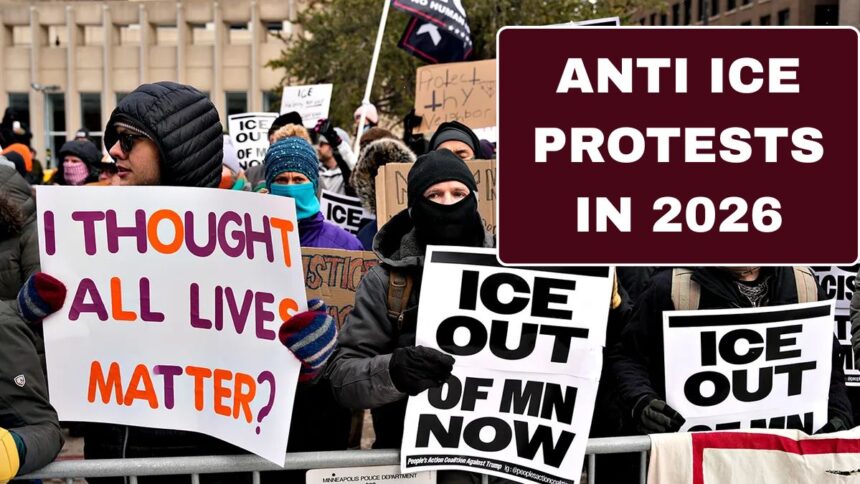
Following the death of Renee Nicole Good at the hands of an Immigration and Customs Enforcement (ICE) agent in Minneapolis on January 1, 2025, protests against ICE erupted throughout the US, particularly within the immigrant and minority community. Protests in Minnesota and other urban areas have occurred in large numbers over time as they continue to spread across the country. We have discussed Anti ICE Protests In 2026 with complete details in this post.

The protests initially started as a focused backlash against the tactics and policies of ICE, but they have now evolved into a much more significant and widespread national movement opposing these tactics, as well as raising additional questions about federal authority and civil rights, and how to maintain immigration policy under the Trump administration.
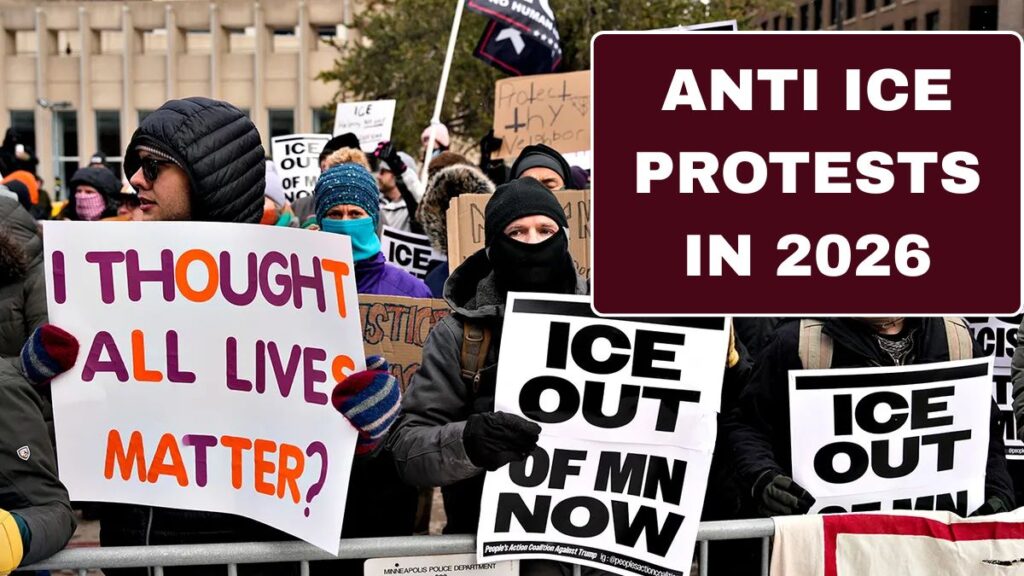
Anti ICE Protests In 2026
The incident didn’t happen in isolation but there are many Anti ICE Protests In 2026. When Trump took office for his second term in 2025, there was a dramatic rise in federal immigration enforcement activity across the U.S. These activities included highly visible raids and mass arrests, even in sanctuary cities, along with methods that would have been used during prior periods when the government significantly increased its enforcement of immigration laws.

A notable example of this was ICE’s Operation Salvo which originally launched out of New York City and was later expanded across the country to further increase the amount of federal immigration arrests and protests from advocacy groups that emphasised threats to due process, as well as their support for the relationship between immigrants and communities.
How did the Anti ICE Protests Happen?
The Anti-ICE Protest in Minneapolis

Minneapolis was the site of the initial anti-ICE protests as a result of the murder of Renee Good. Protests were staged outside of federal buildings across the city, calling for a need for accountability, the removal of ICE officers from Minnesota and justice for the death of Good.
The riots that started as a result of the protests continued into the weekend, with many protesters staying in the area, leading to more arrests by the federal law enforcement and several occasions of violent confrontations between protestors and federal officers. According to reports from the Department of Homeland Security (DHS), thousands of people were arrested in the city during what was reported to be the largest ICE raid inU.S. history.

Reasons Behind the Anti ICE Protests
Opposition to Federal Immigration Enforcement
Many protesters are against what they perceive as excessively aggressive immigration raids that not only target undocumented immigrants but may also affect U.S. citizens and lawful residents. Detractors contend that such strategies undermine trust, especially within immigrant communities, fostering fear instead of collaboration with law enforcement.

Public opinion has significantly changed: recent surveys reveal that a majority of Americans disapprove of ICE’s current practices, particularly following the Renee Good shooting, despite partisan divisions on immigration issues.
Resurgence of the “Abolish ICE” and Rights Movements
Grassroots organisations that once advocated for the elimination or substantial reform of ICE have experienced a revival, connecting the 2026 protests to wider demands for systemic reform in immigration enforcement and the protection of civil liberties. These activists highlight historical issues regarding the disproportionate effects on immigrant, Black, and minority populations.
How is President Trump responding To Anti ICE Protests?
Strengthening Federal Enforcement
President Trump has supported ICE and immigration enforcement initiatives, describing them as essential for public safety and law enforcement. He has consistently countered critics who label the operations as abusive or excessive.
Threats to Utilise Military Forces
Trump has threatened to invoke the 1807 Insurrection Act, a statute permitting the presidential deployment of U.S. troops within the country, to suppress protests in Minnesota if state and local officials are “unable to control” demonstrators targeting federal agents.
In practice, the Pentagon has positioned around 1,500 active-duty soldiers on standby in Alaska for potential deployment to Minneapolis should unrest intensify, although it remains uncertain whether troops will actually be dispatched.