

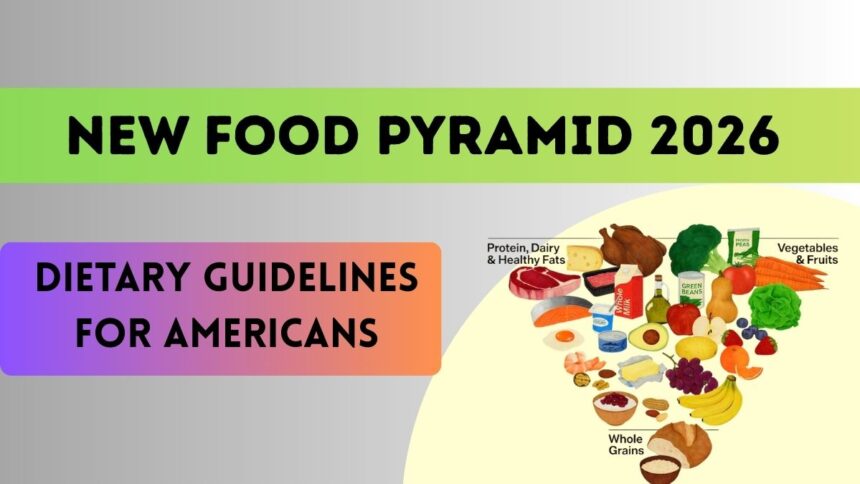
In January 2026, the U.S. government published the 2025–2030 Dietary Guidelines for Americans, signifying one of the most substantial shifts in federal nutrition policy in decades. These guidelines are formulated by the U.S. Department of Health and Human Services (HHS) and the U.S. Department of Agriculture (USDA) now incorporates a new food pyramid and dietary framework that changes the way Americans are instructed to eat for sustained health.

The updated guidelines mirror escalating concerns regarding chronic diseases such as obesity, diabetes, and heart disease, which are connected to dietary and lifestyle factors. Almost 90% of U.S. health care spending is associated with chronic conditions, and more than 70% of American adults are either overweight or obese, according to official government data.
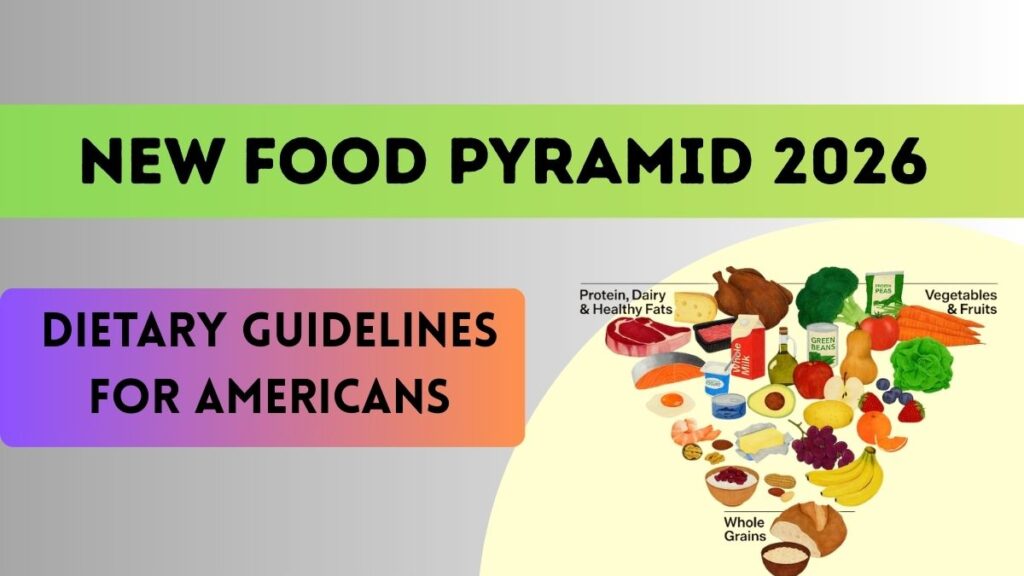
What are the new changes made in the Food Pyramid 2026?
Protein at every meal

The updated guidelines emphasize the importance of including protein in every meal, aiming for an intake of approximately 1.2 to 1.6 grams per kilogram of an individual’s body weight daily. The government advocates for protein sources from animals, including eggs, poultry, seafood, and red meat, alongside plant-based options such as beans, peas, lentils, legumes, nuts, seeds, and soy.
Full-fat dairy is in, low-fat is out

In contrast to the earlier guidelines that favored fat-free or low-fat milk and yogurt, the revised recommendations highlight the benefits of full-fat dairy products without added sugars. The new guidelines suggest three servings of dairy each day, whereas the previous guidelines recommended three cups daily.
This shift may influence school lunch programs, which currently provide children with fat-free or low-fat milk.

Some studies indicate that full-fat dairy may reduce the risk of obesity, potentially due to its satiating properties leading to lower overall consumption. Research has also suggested that it could enhance heart health or, at the very least, not elevate the risk of heart disease.
Drink less alcohol, but no set limit

While the former dietary guidelines advised limiting alcohol intake to one drink per day for women and two for men, the new guidelines merely suggest reducing alcohol consumption for improved overall health.
Avoid highly processed foods
Kennedy has often attributed the rise of chronic diseases to ultraprocessed foods, with studies linking these products to obesity, heart disease, and cancer. In a report from May, Kennedy criticised the dietary guidelines for failing to specifically address these foods.
The new recommendations encourage individuals to steer clear of packaged and ready-to-eat foods that are high in salt or sugar (such as chips, cookies, and candy) and to limit consumption of foods and beverages containing artificial flavours, dyes, preservatives, and sweeteners.
No extra sugar for children and a firm limit for adults.
According to the new guidelines, no quantity of added sugar is deemed healthy, and adults should confine their intake to a maximum of 10 grams per meal.
Previously, the advice was to restrict added sugars to under 10% of total daily calories. (By January 2027, school meal programs are mandated to limit added sugars to less than 10% of calories per meal). It was also recommended that children under the age of 2 avoid foods and drinks with added sugars.
A shift in the fats chosen for cooking
The new recommendations endorse cooking with “healthy fats,” providing olive oil, butter, and beef tallow as examples, the latter being rendered fat from cows that Kennedy has frequently asserted is better than certain cooking oils (a claim that many experts challenge).
Both butter and beef tallow are high in saturated fat, which is acknowledged to increase the risk of cardiovascular disease and weight gain.